
Can Cavities Heal Naturally? What Rock Hill Dentists Want You to Know
If you have ever noticed a dark spot on your tooth or felt a twinge of sensitivity while eating something sweet, your first thought might have been: can my body fix this on its own? It is a fair question. After all, your body heals cuts, mends broken bones, and fights off infections without much help. So why not teeth?
The short answer is complicated. Your teeth do have some ability to repair very early damage through a process called remineralization. But once a cavity has broken through the enamel and formed an actual hole, no amount of brushing or special toothpaste will reverse it. Understanding the difference between early mineral loss and a true cavity is the key to knowing when you can take a watch-and-wait approach versus when you need to get to a dentist.
How Tooth Decay Actually Develops
Tooth decay does not happen overnight. It is a slow, progressive process that moves through distinct stages, and understanding these stages helps explain why "healing" a cavity is only possible at the very beginning.
Stage 1: Demineralization
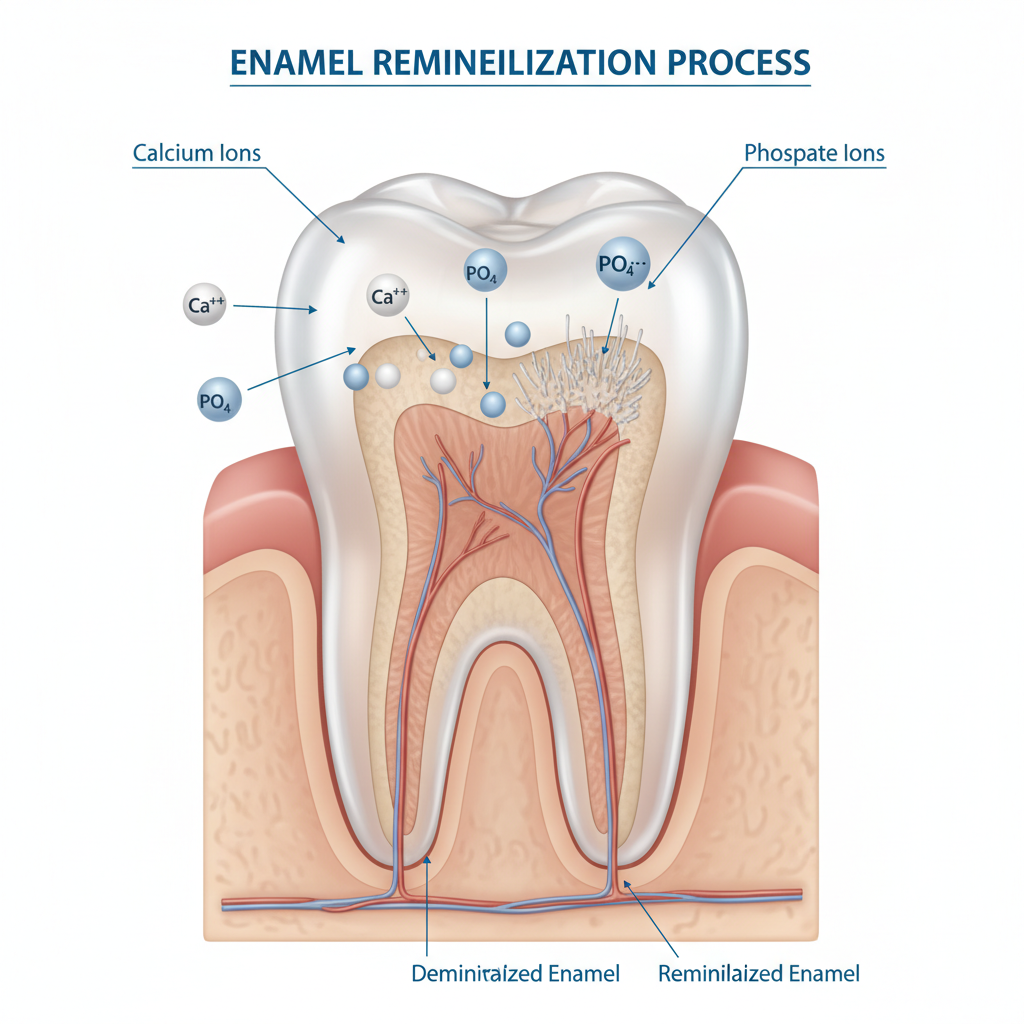
Every time you eat or drink something containing sugar or starch, the bacteria living in your mouth feed on those carbohydrates and produce acid as a byproduct. That acid attacks the mineral crystals that make up your tooth enamel, primarily calcium and phosphate. This process is called demineralization.
At this stage, you might notice white spots on your teeth. These chalky patches indicate that minerals are leaching out of the enamel surface. The tooth structure is weakened but still intact. No hole has formed yet.
Your saliva plays a critical role here. It naturally contains calcium, phosphate, and bicarbonate ions that help neutralize acid and redeposit minerals back into weakened enamel. This is remineralization, and it happens constantly throughout the day. When the rate of remineralization keeps pace with or exceeds demineralization, decay does not progress.
Stage 2: Enamel Decay
If demineralization outpaces your body's repair efforts, the enamel surface eventually breaks down and a physical cavity forms. At this point, the damage is irreversible. Enamel does not contain living cells, so once it is gone, your body cannot regenerate it. A dentist needs to remove the decayed material and place a dental filling to restore the tooth.
Stage 3: Dentin Decay
Beneath the enamel lies dentin, a softer, yellowish tissue that makes up the bulk of your tooth. Decay moves much faster through dentin because it is less mineralized than enamel. You will likely start experiencing sensitivity to hot, cold, and sweet foods at this stage.
Stage 4: Pulp Involvement
If left untreated, decay reaches the pulp chamber, which contains nerves and blood vessels. This is where serious pain begins, and a root canal treatment becomes necessary to save the tooth.
Stage 5: Abscess
The final stage involves infection spreading beyond the tooth root into the surrounding bone and tissue, forming an abscess. This is a dental emergency that requires immediate treatment.
What Remineralization Can and Cannot Do
Remineralization is real, and it is happening in your mouth right now. But it has clear limits.
What remineralization CAN do:
- Reverse white spot lesions (pre-cavities) on enamel
- Strengthen weakened enamel that has not yet cavitated
- Slow down the progression of very early decay
- Repair microscopic surface damage from daily acid exposure
What remineralization CANNOT do:
- Fill in a hole that has already formed in the enamel
- Rebuild dentin or pulp tissue
- Replace tooth structure that has been lost to decay
- Cure an active cavity that a dentist can detect on an X-ray
Think of it like a scratch on a car versus a dent. A light scratch in the clear coat might buff out. But once the metal is dented, no amount of polishing will push it back into shape.
Evidence-Based Ways to Support Remineralization
If your dentist identifies early-stage demineralization, there are several steps you can take to give your teeth the best chance of recovering.
Fluoride Is the Gold Standard
Fluoride is the most well-studied and effective agent for promoting remineralization. When fluoride ions are present during the remineralization process, they integrate into the enamel crystal structure, creating fluorapatite. This compound is significantly more resistant to acid attack than the original hydroxyapatite.
Use fluoride toothpaste with at least 1,000 ppm fluoride twice daily. Your dentist may also recommend prescription-strength fluoride toothpaste (5,000 ppm) or professional fluoride varnish treatments during your dental cleaning appointments.
Reduce Sugar Frequency
It is not just how much sugar you eat but how often you eat it. Every sugar exposure triggers a 20-30 minute acid attack on your teeth. Sipping on a sugary coffee all morning causes far more damage than drinking it quickly with a meal. Limit snacking between meals and drink water after consuming anything acidic or sweet.
Stimulate Saliva Production
Saliva is your mouth's natural defense system. Chew sugar-free gum containing xylitol after meals to stimulate saliva flow. Xylitol has the added benefit of being toxic to the Streptococcus mutans bacteria primarily responsible for cavity formation.
Stay hydrated throughout the day. Dry mouth, whether from medication side effects, mouth breathing, or medical conditions, dramatically increases cavity risk because it removes your primary remineralization mechanism.
Calcium and Phosphate Products
Products containing casein phosphopeptide-amorphous calcium phosphate (CPP-ACP), such as MI Paste, can deliver additional calcium and phosphate directly to tooth surfaces. Some studies show these products enhance remineralization, particularly when used alongside fluoride.
Diet Modifications
Foods rich in calcium (dairy products, leafy greens), phosphorus (meat, fish, eggs), and vitamin D support overall tooth health. Cheese is particularly beneficial because it raises the pH in your mouth, stimulates saliva, and delivers calcium and phosphate directly.
What About Natural Remedies?
The internet is full of claims about natural cavity cures. Let us look at what the evidence actually says.
Oil Pulling
Swishing coconut or sesame oil in your mouth for 15-20 minutes has roots in Ayurvedic medicine. Some small studies suggest it may reduce the bacterial count in saliva, but there is no evidence it reverses cavities or promotes remineralization. It is harmless as a supplement to regular oral hygiene but should never replace brushing and flossing.
Vitamin D and K2
Adequate vitamin D is important for calcium absorption and overall bone health, which includes the bone supporting your teeth. Some proponents claim high-dose vitamin D and K2 supplementation can heal cavities, citing a 1930s study. However, modern research does not support the claim that these vitamins can reverse established cavities. They are important for general health but are not a cavity cure.
Dietary Changes Alone
The idea that switching to a nutrient-dense, low-sugar diet can heal cavities gained popularity from Dr. Weston Price's research in the 1930s. While reducing sugar intake absolutely slows and can prevent decay progression, and while nutrient-dense diets support overall dental health, diet alone cannot rebuild enamel that has already been lost to cavitation.
When to See a Dentist
Regular dental exams are the only reliable way to catch decay at a stage where remineralization is still possible. By the time you can see a cavity or feel pain, the damage has progressed well beyond what your body can repair.
At Piedmont Dental in Rock Hill, SC, we use digital X-rays and intraoral cameras to detect demineralization in its earliest stages. When we find white spot lesions, we can create a targeted plan to reverse them before they become cavities, potentially saving you from needing a filling altogether.
You should schedule an appointment if you notice:
- White or brown spots on your teeth
- Sensitivity to sweet, hot, or cold foods
- Pain when biting down
- Visible holes or dark spots on any tooth
- Bad breath that does not improve with brushing
Preventing Cavities in the First Place
Prevention is always more effective and less expensive than treatment. Here is what the research consistently shows works:
- Brush twice daily with fluoride toothpaste for two full minutes
- Floss daily to clean between teeth where your brush cannot reach
- Limit sugar intake and avoid frequent snacking
- Drink water throughout the day, especially after meals
- Visit your dentist every six months for professional cleanings and exams
- Consider dental sealants for children and cavity-prone adults
- Chew xylitol gum after meals when you cannot brush
Frequently Asked Questions
Can a cavity go away on its own without a filling?
Once a true cavity has formed (meaning the enamel surface has broken and a hole exists), it cannot heal on its own. Only very early-stage demineralization (white spot lesions) can be reversed through remineralization. If your dentist has identified an actual cavity, you will need a filling or other restoration to prevent further damage.
How long does it take for a cavity to form?
Cavity development varies significantly from person to person. In some cases, a cavity can develop in as little as a few months, while others may take a year or more. Factors including diet, oral hygiene habits, saliva composition, fluoride exposure, and genetics all influence the timeline.
Does fluoride really help reverse early cavities?
Yes. Fluoride is the most evidence-backed agent for reversing early demineralization. It integrates into weakened enamel to create a stronger, more acid-resistant mineral structure. Both over-the-counter fluoride toothpaste and professional fluoride treatments from your dentist are effective.
Are white spots on teeth always cavities?
Not necessarily. White spots can indicate early demineralization, but they can also result from fluorosis, developmental enamel defects, or orthodontic treatment. A dental examination can determine the cause and whether treatment is needed.
Can I remineralize a cavity at home?
You can support the remineralization of very early enamel lesions at home using fluoride toothpaste, xylitol products, and dietary changes. However, you cannot diagnose the stage of decay yourself. What looks like a minor issue on the surface may be more advanced beneath. Always get a professional assessment.
How much does it cost to fill a cavity in Rock Hill, SC?
The cost of a filling depends on the size, location, and material used. Tooth-colored composite fillings typically range from $150 to $400 per tooth. Most dental insurance plans cover a significant portion of filling costs. At Piedmont Dental, we offer transparent pricing and work with most insurance plans. Call us at (803) 328-3886 to discuss your specific situation.
Is it better to wait and watch a small cavity?
In certain cases, your dentist may recommend monitoring a very small cavity that has not yet penetrated deeply into the enamel, especially if you implement aggressive remineralization strategies. However, this decision should always be made with your dentist based on X-rays and clinical examination, not on your own.
What happens if you ignore a cavity?
Untreated cavities progressively worsen. The decay spreads through the enamel into the dentin, then reaches the pulp, causing significant pain and requiring a root canal. If infection develops, an abscess can form, which may require extraction. Early treatment with a simple filling is always preferable to these more complex and costly procedures.
---
Piedmont Dental provides comprehensive preventive and restorative dental care in Rock Hill, SC. If you are concerned about a potential cavity or want to learn more about protecting your teeth, contact us or call (803) 328-3886 to schedule an appointment.