
How to Clean and Care for Your Dental Night Guard
If you wear a dental night guard for teeth grinding (bruxism) or jaw clenching, you already know it protects your teeth from serious damage. What you might not realize is that a dirty night guard can become a breeding ground for bacteria, mold, and yeast, potentially causing bad breath, gum irritation, and even infections.
Proper cleaning takes less than five minutes a day and can extend the life of your guard by years. Here is everything you need to know about keeping your night guard clean and in good shape.
Why Cleaning Your Night Guard Matters
Every night, your mouth guard sits in a warm, moist environment filled with bacteria. Your mouth contains over 700 species of microorganisms, and when you wear a guard for 6-8 hours, many of them transfer onto and into the guard material.
Studies have found that poorly maintained oral appliances can harbor:
- Streptococcus and Staphylococcus bacteria
- Candida yeast (which causes oral thrush)
- Mold, particularly if the guard is stored damp
- Biofilm buildup that becomes increasingly difficult to remove over time
A contaminated night guard placed in your mouth every night essentially reintroduces concentrated bacteria and fungi directly onto your teeth and gums. This can contribute to bad breath, increased cavity risk, gum inflammation, and sore throats.
Daily Cleaning Routine
The single most important habit is cleaning your guard every morning when you take it out. Bacteria begin colonizing the surface immediately, and a dried biofilm is much harder to remove than a fresh one.
Step 1: Rinse Immediately
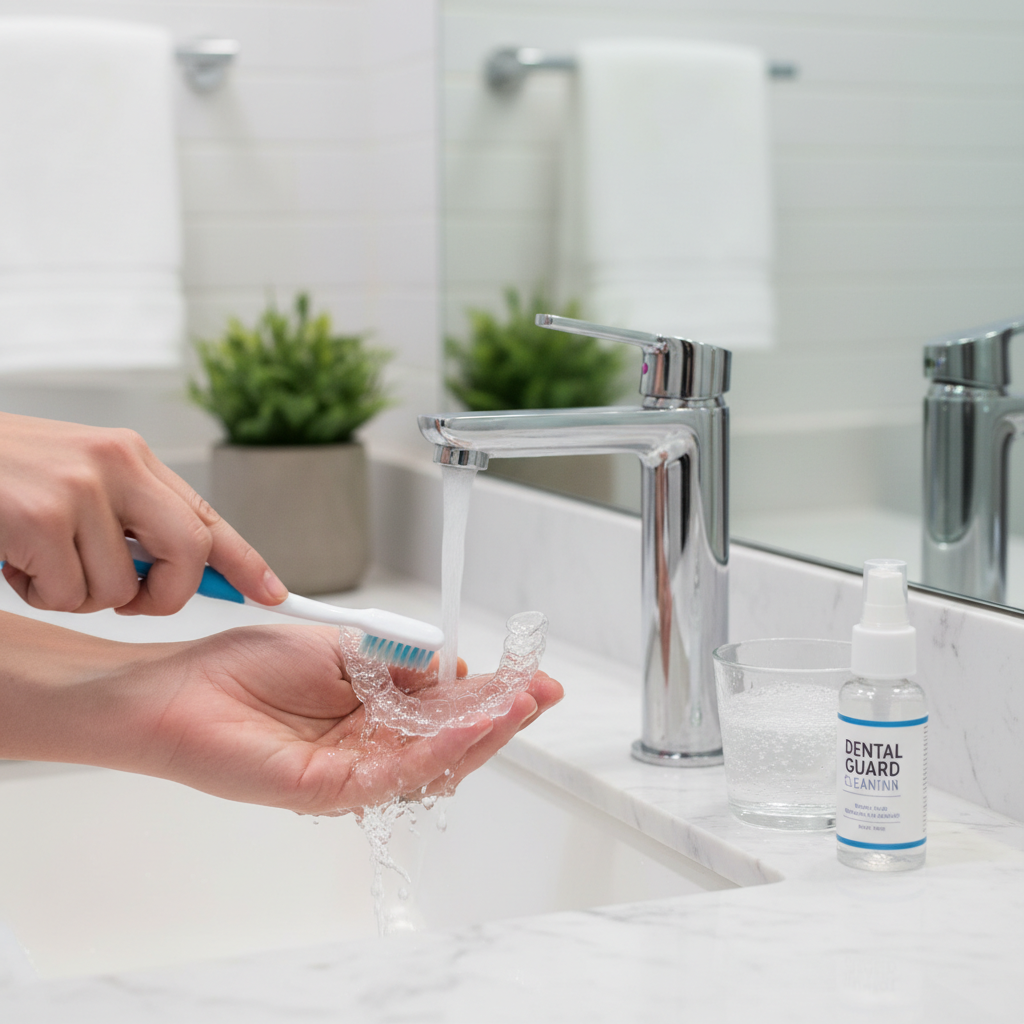
As soon as you remove your night guard in the morning, rinse it thoroughly under cool or lukewarm running water. Never use hot water, as heat can warp the thermoplastic material most guards are made from, destroying the fit.
Step 2: Brush Gently
Using a separate soft-bristled toothbrush (not the one you use for your teeth), gently brush the entire surface of the guard. Use a small amount of liquid dish soap, castile soap, or non-abrasive hand soap. Brush the inside, outside, and all edges.
Do not use toothpaste. Most toothpastes contain mild abrasives designed to scrub your enamel. These abrasives create microscopic scratches on the guard surface, which become harboring sites for bacteria and can make the guard appear cloudy over time.
Step 3: Rinse Thoroughly
Rinse the guard completely under running water to remove all soap residue. Soap left on the guard can taste unpleasant and may irritate your gum tissue.
Step 4: Air Dry
Place the guard on a clean surface or in its ventilated case and let it air dry completely before storing. Storing a damp guard in a closed case creates the humid conditions bacteria and mold love.
Weekly Deep Cleaning
In addition to daily cleaning, a deeper cleaning once a week helps remove buildup that daily brushing might miss.
Option 1: Hydrogen Peroxide Soak
Mix equal parts 3% hydrogen peroxide and water. Submerge the guard for 20-30 minutes, then rinse thoroughly and air dry. Hydrogen peroxide is an effective disinfectant that breaks down biofilm without damaging most guard materials.
Option 2: Distilled White Vinegar Soak
Mix equal parts white vinegar and water. Soak for 20-30 minutes, rinse well, and air dry. Vinegar is mildly acidic and effective against many bacteria and some fungi. The smell dissipates after rinsing.
Option 3: Denture Cleaning Tablets
Over-the-counter denture cleaning tablets (like Polident or Efferdent) work well for night guards. Drop one tablet into a glass of lukewarm water, submerge the guard for the recommended time (usually 15-20 minutes), rinse, and dry.
Option 4: Baking Soda Paste
Make a paste with baking soda and a small amount of water. Apply it to the guard with a soft brush, gently scrub, let it sit for a few minutes, then rinse. Baking soda is mildly abrasive but much gentler than toothpaste and helps deodorize.
What NOT to Do
Certain common cleaning methods can damage your guard or make the hygiene problem worse:
- Do not use hot or boiling water. Heat warps the plastic and ruins the custom fit.
- Do not put it in the dishwasher. Same reason, plus harsh detergents can degrade the material.
- Do not use toothpaste. Abrasives scratch the surface, creating bacterial hideouts.
- Do not soak in alcohol or alcohol-based mouthwash. Alcohol can dry out and crack certain guard materials and may warp the shape.
- Do not leave it soaking for hours. Extended soaking in any solution can degrade the material over time.
- Do not store it in a napkin or tissue. Guards stored this way frequently get thrown away by mistake. Use a proper case.
Proper Storage
How you store your night guard between uses matters as much as how you clean it.
Use a ventilated case. Your guard should have come with a hard case that has ventilation holes. If yours does not have holes, you can carefully drill a few small ones. Airflow prevents the moist conditions that promote bacterial and mold growth.
Keep it away from pets. Dogs in particular are attracted to night guards because they carry your scent and saliva. A dog can destroy a custom guard in seconds.
Store at room temperature. Do not leave your guard in a hot car, in direct sunlight, or near a heat source. Thermoplastic materials deform at relatively low temperatures.
Bring it to dental appointments. Your dentist should inspect your guard during regular checkups to ensure it still fits properly and is not showing excessive wear.
When to Replace Your Night Guard
Even with perfect care, night guards do not last forever. Here are signs it is time for a replacement:
- Visible wear through: If you can see thin spots, holes, or bite-through marks
- Cracking or splitting: Any structural damage compromises protection
- Persistent odor: If thorough cleaning cannot eliminate a bad smell, bacteria have likely penetrated the material
- Poor fit: If the guard feels loose, tight, or uncomfortable, your teeth may have shifted or the material has warped
- Discoloration that will not clean off: Deep staining indicates the material has absorbed contaminants
- It has been 2-5 years: Custom guards typically last 3-5 years with good care; over-the-counter guards may need replacement every 6-12 months
Custom vs. Over-the-Counter Guards
The type of guard you have affects both how you care for it and how long it lasts.
Custom guards made by your dentist from professional-grade materials are more durable, fit precisely, provide better protection, and generally last 3-5 years. They are easier to clean because the smooth, well-fitting surface resists bacterial adhesion.
Over-the-counter boil-and-bite guards are made from softer, more porous materials that harbor bacteria more readily. They require more diligent cleaning and need replacement more frequently. The imprecise fit can also cause jaw issues if worn long-term.
If you are grinding your teeth enough to need a night guard, a custom-fitted guard from your dentist is worth the investment for both protection and hygiene.
Frequently Asked Questions
Can a dirty night guard make you sick?
While it is uncommon for a night guard to cause a serious illness, a contaminated guard can contribute to bad breath, sore throats, gum irritation, oral thrush (yeast infection), and increased cavity risk. People with compromised immune systems should be especially diligent about guard hygiene.
How often should I replace my night guard?
Custom guards typically last 3-5 years with proper care. Over-the-counter guards may need replacement every 6-12 months. Replace any guard that shows signs of wear-through, cracking, persistent odor, or poor fit regardless of age.
Can I use mouthwash to clean my night guard?
Avoid alcohol-based mouthwash, which can degrade the guard material. If you prefer a mouthwash-based clean, use an alcohol-free formula and limit soaking to 10-15 minutes. Daily soap-and-brush cleaning is more effective.
Should I clean my night guard case too?
Yes. Wash your case with dish soap and warm water at least once a week. Let it air dry completely before placing your guard inside. Replace the case if it develops cracks or persistent discoloration.
What is the white buildup on my night guard?
White deposits are typically calcium buildup from your saliva, similar to tartar on your teeth. A vinegar soak usually dissolves these deposits. If they persist, bring the guard to your dentist for professional cleaning during your next visit.
Is it safe to share a night guard?
Never share an oral appliance. Night guards are custom-fitted to your mouth and sharing them transfers bacteria, viruses, and other pathogens between individuals. Each person needs their own guard.
---
If you grind your teeth or clench your jaw, a custom night guard from Piedmont Dental can protect your teeth and jaw joint from damage. Contact us or call (803) 328-3886 to schedule a consultation in Rock Hill, SC.